
Case study · Twist Digital · Primary developer
StyleFrame AI
From a garment scan to a virtual try-on
Overview
The project at a glance
Primary developer of an AI retail platform, from the shopper studio and shop-owner portals to asynchronous image generation, catalogue tools, and usage controls.
- Catalogue-connected shopper studio
- QR / Barcode
- AI try-on with asynchronous generation
- Multi-garment
- Shop access, usage, and credit controls
- Tenant-aware
Scope & contribution
StyleFrame AI brings AI-powered virtual try-on into a retailer's shopping experience. As its primary developer at Twist Digital, I lead technical decisions across the shopper studio, catalogue management, admin and shop-owner portals, backend, and deployment. The retailer platform is implemented; the consumer mobile app remains in development, with its Flutter foundation, API connectivity, and secure token storage established.
Technology stack
Web & API
- Next.js
- React
- NestJS
AI & data
- fal.ai
- PostgreSQL
- Prisma
Language
- TypeScript
Mobile foundation · In development
- Flutter
- Dart
- MVVM
The story
Decisions behind the delivery
01A short path from scan to preview
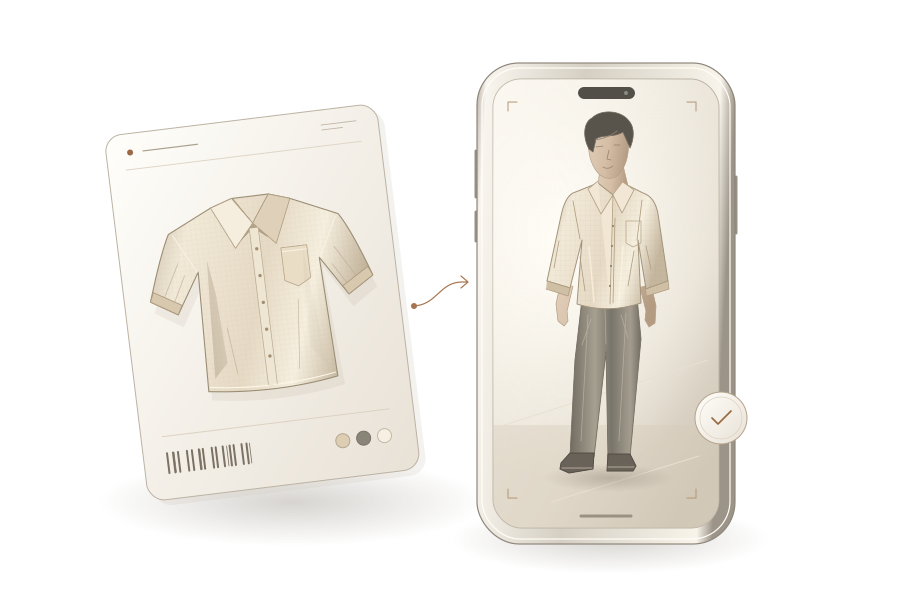
I built a QR/barcode-enabled studio that connects a shop's catalogue to a shopper's own photo. Photo validation and multi-garment selection feed an asynchronous generation flow through fal.ai, with progress and result states in the interface. The system manages the work as a job rather than keeping the shopper waiting on a single long request.
02The product around the AI model
A try-on engine also needs tools for the people running the shop. I built catalogue management, admin and shop-owner portals, and usage analytics. Shop-scoped data and role-based access controls separate retailer activity and distinguish platform administration from shop operations.
03Making generation accountable
AI requests consume a real budget. I implemented credit accounting, generation allowances, and spending checks before a job reaches the provider. Session-image cleanup removes temporary assets when a session ends or expires. These controls are part of the generation lifecycle, alongside image validation and handling asynchronous provider results.
04A retailer platform, with mobile taking shape
The web product uses Next.js, React, NestJS, PostgreSQL, and Prisma. I also established a Flutter and Dart foundation for Android and iOS with MVVM, API connectivity, and secure token storage. Consumer features are still being developed; the mobile app is not presented here as a completed release.
Overview
StyleFrame AI brings AI-powered virtual try-on into a retailer's shopping experience. As its primary developer at Twist Digital, I lead technical decisions across the shopper studio, catalogue management, admin and shop-owner portals, backend, and deployment. The retailer platform is implemented; the consumer mobile app remains in development, with its Flutter foundation, API connectivity, and secure token storage established.
- Catalogue-connected shopper studio
- QR / Barcode
- AI try-on with asynchronous generation
- Multi-garment
- Shop access, usage, and credit controls
- Tenant-aware
01 · Shopper experience
A short path from scan to preview
I built a QR/barcode-enabled studio that connects a shop's catalogue to a shopper's own photo. Photo validation and multi-garment selection feed an asynchronous generation flow through fal.ai, with progress and result states in the interface. The system manages the work as a job rather than keeping the shopper waiting on a single long request.
02 · Retail operations
The product around the AI model
A try-on engine also needs tools for the people running the shop. I built catalogue management, admin and shop-owner portals, and usage analytics. Shop-scoped data and role-based access controls separate retailer activity and distinguish platform administration from shop operations.
03 · Engineering
Making generation accountable
AI requests consume a real budget. I implemented credit accounting, generation allowances, and spending checks before a job reaches the provider. Session-image cleanup removes temporary assets when a session ends or expires. These controls are part of the generation lifecycle, alongside image validation and handling asynchronous provider results.
04 · Current scope
A retailer platform, with mobile taking shape
The web product uses Next.js, React, NestJS, PostgreSQL, and Prisma. I also established a Flutter and Dart foundation for Android and iOS with MVVM, API connectivity, and secure token storage. Consumer features are still being developed; the mobile app is not presented here as a completed release.
Next case study
Alpha PetCare